Paperwork has long been treated as the backbone of workplace safety. Forms, permits, audits, and inductions are designed to create order in complex environments where multiple contractors, tasks, and risks intersect. On the surface, this documentation often appears thorough and compliant. Yet history shows that serious incidents can still occur even when every required form has been filled out.
This disconnect raises an uncomfortable question for many industries: if the paperwork was complete, why did the risk remain invisible?
The answer often lies not in the absence of documentation, but in how that documentation is managed, connected, and acted upon. When compliance becomes a routine exercise rather than an active safety process, paperwork can unintentionally mask emerging hazards instead of preventing them. Understanding this distinction is critical for organizations seeking to strengthen contractor safety and oversight without assigning blame or revisiting past events with accusation.
Contractor Management Beyond Documents
Contractor management is frequently treated as an administrative function. Certificates are collected, agreements are signed, and records are stored for audit purposes. While these steps are necessary, they are not sufficient on their own to control risk in dynamic work environments.
Contractors often move between sites, roles change, and work conditions evolve rapidly. Static records struggle to reflect these changes in real time. When contractor information is spread across emails, spreadsheets, and disconnected systems, visibility is lost. Oversight becomes reactive rather than proactive.
A more connected approach to contractor management could help organizations shift from assumption-based safety to verification-based safety. When contractor data is centralized, updated, and reviewed continuously, decision-makers gain a clearer picture of who is onsite, what they are approved to do, and whether their compliance status still reflects current conditions.
The Role of a Contractor Portal in Oversight
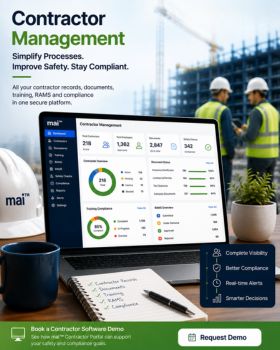
A contractor portal is often misunderstood as just another repository for documents. In practice, its value lies in how it connects people, approvals, and records into a single, traceable process.
When contractor submissions, reviews, and approvals are managed through a unified portal, gaps become easier to identify. Expired insurance, missing training, or unapproved scope changes are less likely to go unnoticed. Instead of relying on memory or manual follow-ups, the system itself creates accountability.
Used correctly, a contractor portal could help organizations ensure that access decisions are based on verified information rather than assumptions. This does not eliminate risk entirely, but it reduces the likelihood that critical oversights remain hidden behind completed forms.
Why Work Permits Fail When Conditions Change
Work permits are designed to control high-risk activities by defining boundaries, responsibilities, and conditions. However, permits are often approved once and treated as final, even though real-world conditions rarely remain static.
Weather changes, simultaneous operations increase, equipment behaves unexpectedly, or site layouts shift. When permits are not revisited as conditions evolve, they lose relevance. Paper-based permits are particularly vulnerable to this issue, as updates depend on manual intervention and physical access.
Using top work permit software could help address this challenge by keeping permits live rather than static. Digital permits can reflect current conditions, show real-time status, and maintain a clear approval trail. This allows teams to respond to change instead of assuming that yesterday’s controls are still effective today.
Importantly, this approach reframes permits as safety tools rather than administrative checkboxes.
Induction Training as an Active Safety Control
Induction training is often treated as a one-time requirement completed before site access is granted. While initial inductions are essential, relying solely on them assumes that risks remain constant and that roles do not evolve.
In reality, contractors may return to sites after long gaps, take on new responsibilities, or work in areas with different hazards. Without updated inductions, individuals may unknowingly operate with outdated knowledge.
A contractor induction app could help organizations address this gap by making inductions accessible, trackable, and repeatable. Digital inductions can be updated as site conditions change and reassigned when roles shift. This ensures that training reflects current realities rather than historical assumptions.
When induction training is treated as an ongoing process rather than a formality, it becomes a meaningful safety control rather than a compliance exercise.
Learning from Incidents Without Assigning Blame
Many tragic environmental and industrial events have shown that incidents rarely stem from a single failure. More often, they result from a chain of small oversights that align over time. Documents may exist, but connections between them are weak. Information may be available, but not visible to the right people at the right moment.
Framing these events as learning opportunities allows industries to improve systems without focusing on fault. By examining how paperwork, permits, and training interact, organizations can identify where visibility breaks down and where assumptions replace verification.
This perspective encourages improvement rather than defensiveness and supports long-term safety culture development.
Connecting Systems Instead of Accumulating Forms
Safety does not fail because organizations lack paperwork. It fails when paperwork operates in isolation. Contractor management records, work permits, and induction training often exist as separate processes, even though they influence the same outcomes.
Connecting these elements into a single system creates continuity. A contractor’s approval status informs permit eligibility. Permit changes trigger induction updates. Training completion influences site access. When systems communicate, oversight becomes stronger and more reliable.
For organizations evaluating digital options, the decision to buy online induction software or adopt integrated permit tools should be guided by how well these systems work together rather than how many features they list individually.
Measuring the Impact of Training and Oversight
One of the challenges organizations face is understanding whether safety investments deliver real value. Training programs, inductions, and system upgrades require time and resources, yet their impact is often difficult to quantify.
To help address this, organizations can use tools like the free SHEQ Training ROI Calculator to estimate the value of training initiatives and identify areas for improvement. By linking training outcomes to reduced incidents, improved compliance, and operational efficiency, safety becomes a measurable business asset rather than an abstract obligation.
👉 To calculate the value of your training programs, try the free SHEQ Training ROI Calculator here:
https://sheqnetwork.com/sheq-training-roi-calculator/
Accessibility, Mobility, and Real-World Conditions
Modern worksites are not always connected environments. Remote locations, underground facilities, and temporary projects often operate with limited or unreliable connectivity. Systems that rely entirely on constant internet access can struggle under these conditions.
Having a work permit solution that also functions through an app and works offline could help ensure continuity even when networks are unavailable. Offline capability allows permits to remain accessible, updates to be captured, and data to sync once connectivity is restored. This practical consideration can make the difference between theoretical compliance and real-world usability.
From Compliance on Paper to Proof in Practice
Safety systems are most effective when they reflect how work actually happens. Paperwork alone cannot adapt, question, or verify. Connected systems can.
By rethinking contractor management, strengthening the role of a contractor portal, adopting top work permit software, and treating induction training as an ongoing process through a contractor induction app, organizations can move closer to safety that is visible, verifiable, and resilient.
The goal is not to eliminate paperwork, but to ensure it supports oversight rather than replacing it. When documentation becomes part of a living system instead of an isolated record, safety shifts from compliance on paper to proof in practice.
Supporting Better Oversight Through Connected Safety Systems
As organizations continue to rethink how contractor safety is managed, many are exploring platforms that bring contractor records, permits, and induction training into one connected environment. Solutions like SHEQ Network are designed with this integration in mind, helping teams move beyond isolated paperwork toward clearer visibility and accountability across worksites.
SHEQ Network provides digital contractor management, online inductions, and work permit processes within a single platform, supported by a mobile app that can also operate offline — a practical consideration for remote or high-risk locations. By focusing on verification, traceability, and real-world usability, such platforms could help organizations strengthen oversight while maintaining a consistent and respectful approach to safety management.
For teams looking to better understand the effectiveness of their training programs, SHEQ Network also offers tools such as the Training ROI Calculator, supporting data-driven decisions around safety investments and continuous improvement.
For organizations looking to move beyond fragmented paperwork toward clearer contractor oversight, SHEQ Network offers the option to book a personalized demonstration. The session provides a practical look at how a connected contractor portal, work permits, and induction processes could help improve visibility, traceability, and workforce readiness — without adding unnecessary complexity.
📞 Contact Us:
USA: +1 (941) 337-167
Ireland: (+353) 21 4536034
UK: (+44) 800 8021092
🚀 Learn how SHEQ Network can support safer workflows!
📧 info@sheqnetwork.com
🔗 Learn more at sheqnetwork.com