

Every serious safety conversation starts with one simple question: who approved this work, and under what conditions?
On high-risk sites, that question is never theoretical. It defines accountability, control, and ultimately whether people go home safe.
For decades, organizations have relied on paper-based permits, scanned PDFs, or email approvals to manage hazardous activities. On the surface, these methods appear compliant. In reality, they often create blind spots—missing signatures, outdated risk assessments, or permits approved without full visibility of site conditions. This is where modern safe work permit practices are evolving, not by adding more paperwork, but by changing how control is maintained.
Why Permit to Work Still Fails on Many Sites
A permit to work system was never meant to be a formality. It exists to ensure that dangerous tasks only begin after hazards are identified, controls are confirmed, and responsibilities are clearly assigned. Yet in many operations, the process becomes fragmented. One document sits in a site office. Another is attached to an email. A third exists only as a photo on someone’s phone.
When work spans multiple teams, contractors, and shifts, this fragmentation grows. Supervisors may believe controls are in place, while conditions on site have already changed. Contractors may arrive with outdated approvals. Safety teams are left reacting instead of monitoring.
A digital work permit system in safety does not eliminate risk by itself, but it could help restore visibility. By centralizing approvals, attachments, and status updates, organizations regain a live understanding of what work is happening and under which conditions.
From Static Forms to Living Control Systems
Traditional permits capture a moment in time. Modern permit to work system software treats permits as living records that evolve as work progresses. Instead of locking information inside files, digital systems connect risk assessments, isolations, and authorizations into a single workflow.
This shift matters because high-risk work rarely stays static. Weather changes. Equipment availability changes. Contractor teams rotate. When permits remain disconnected from real-time updates, decisions are made on assumptions rather than facts.
A connected approach can help supervisors see whether RAMS have been reviewed, whether gas tests are current, and whether isolations are still valid—before approving or continuing work. The permit becomes a control mechanism, not just a compliance document.
The Role of Contractors in Permit Control
Contractors often carry out the most hazardous activities on site, yet they are frequently managed through separate systems. This separation creates gaps between contractor induction, verification, and permit issuance. A work permit for contractors is only effective when it is linked to contractor competency and authorization.
When permit systems integrate with contractor portals, only verified individuals can request or receive permits. Expired inductions, missing certifications, or incomplete documentation automatically block approvals. This integration could help ensure that permits are not issued based on trust alone, but on verified readiness.
For organizations managing multiple contractors across locations, unified work permit solutions reduce dependency on manual cross-checks and verbal confirmations. Everything needed to approve work exists in one place.
Visibility Is the Real Safety Advantage
One of the most overlooked weaknesses of paper-based permits is delayed awareness. Safety teams often discover issues after work has started, when corrective action becomes reactive. Digital dashboards change this dynamic by showing permit status in real time.
With centralized visibility, managers can identify bottlenecks, overlapping high-risk activities, or permits nearing expiry. Patterns emerge over time, highlighting where controls are frequently delayed or misunderstood. This insight could help organizations improve not only compliance, but planning and coordination.
Visibility also supports audits and investigations. Instead of searching folders or inboxes, permit histories are traceable, timestamped, and consistent.
Mobility, Offline Access, and Real-World Conditions
Work does not stop because connectivity drops. That reality makes mobile access and offline functionality critical. A permit system that works only at a desk cannot support dynamic site environments.
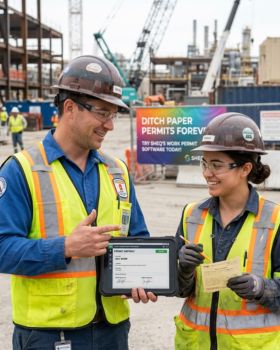
Mobile-enabled platforms allow supervisors to review and approve permits directly from the field. Offline capability ensures work can continue safely even in remote or restricted locations, with data syncing once connectivity is restored. This approach could help maintain control without forcing teams to bypass procedures due to technical limitations.
Having an app-based system also improves adoption. When tools align with how people actually work, compliance becomes practical rather than burdensome.
Online Induction and Permit Readiness
Permit effectiveness begins before work is requested. Online induction training ensures that workers understand site rules, permit requirements, and emergency procedures in advance. When induction systems connect with permits, readiness is no longer assumed—it is verified.
Workers arrive knowing what is expected. Supervisors see induction status before approving tasks. This connection could help reduce last-minute delays and unsafe assumptions at the workface.
By embedding induction into the permit lifecycle, organizations shift safety upstream, where prevention is most effective.
Compliance Without Box-Ticking
Regulatory compliance is often treated as the end goal, but compliance alone does not guarantee safety. The real objective is control—knowing that the right work is happening under the right conditions, at the right time.
Modern work permit solutions support this by aligning procedures with actual operations. They reduce reliance on memory, paperwork, and informal approvals. Instead, they create a structured environment where accountability is clear and decisions are informed.
This does not replace human judgment. It strengthens it.
A Practical Way Forward
As operations become more complex, permit systems must evolve with them. Digital platforms that combine safe work permit, contractor verification, online induction training, and mobile access could help organizations move from reactive oversight to proactive control.
At the center of this evolution is clarity—clarity about who approved the work, why it was approved, and whether conditions still support it.
Solutions like those offered by SHEQ Network, including a dedicated app with offline functionality, are designed to support this clarity without disrupting real-world workflows. By connecting people, permits, and data in one system, organizations gain a more reliable foundation for safety-critical decisions.
Because in high-risk environments, the most important question is not whether a permit exists—but whether it truly reflects what is happening on site.
📞 Contact Us:
USA: +1 (941) 337-1671
Ireland: (+353) 21 4536034
UK: (+44) 800 8021092
🚀 Learn how SHEQ Network can support safer workflows!
📧 info@sheqnetwork.com
🔗 Learn more at sheqnetwork.com




One Comment