
Pharmaceutical plants, biotech labs, chemical manufacturing units, and food & beverage production facilities operate in environments where compliance is not just a requirement — it is a responsibility. A single lapse in contractor documentation, safety training, or license validity can trigger regulatory scrutiny, operational shutdowns, or reputational damage that takes years to repair.
Yet many life sciences organizations still rely on spreadsheets, emails, shared drives, and manual gate checks to manage third-party contractors. The result? Delays in onboarding, uncertainty around certifications, and compliance risks that surface only during audits.
As regulatory frameworks tighten across pharma, biopharma, chemicals, and food production, businesses are moving toward a centralized contractor management platform designed specifically to control risk before it escalates.
The Hidden Risks of Manual Contractor Management in Life Sciences
Life sciences facilities are complex ecosystems. Contractors may include maintenance technicians, validation engineers, cleaning staff, equipment installers, auditors, and specialized consultants. Each individual entering a GMP-regulated site must meet strict safety, training, and documentation requirements.
Without structured contractor tracking software, organizations often struggle with:
- Incomplete induction records
- Expired certifications
- Unverified training documentation
- Lack of real-time visibility into contractor status
- Delays during compliance audits
In pharmaceutical and biopharma environments, even minor non-conformities could lead to regulatory observations. In chemical facilities, safety gaps could create operational hazards. In food and beverage production, missing compliance documentation could compromise quality assurance.
A digital contractor compliance software solution could help standardize these processes, ensuring that every contractor entering the facility is verified, trained, and compliant.
Why Life Sciences Require a Dedicated Contractor Portal
Unlike general industries, life sciences operate under strict quality systems such as GMP, HACCP, and ISO frameworks. These require traceable documentation and auditable workflows.
A structured contractor portal allows organizations to centralize contractor onboarding, document submission, and approval workflows in one secure environment. Instead of chasing paperwork via email, contractors upload certifications, insurance documents, and training records directly into the system.
This approach could help:
- Reduce administrative burden on SHEQ and compliance teams
- Ensure required documents are in place before site access
- Create a secure, role-based approval workflow
- Maintain version control and audit trails
For highly regulated sectors like pharmaceuticals and food production, having instant access to verified contractor records during inspections can significantly reduce stress and uncertainty.
From Reactive to Proactive: Real-Time Contractor Visibility
Traditional systems often reveal compliance gaps only when something goes wrong. A contractor arrives on-site with an expired license. A safety induction was never completed. An insurance certificate lapsed unnoticed.
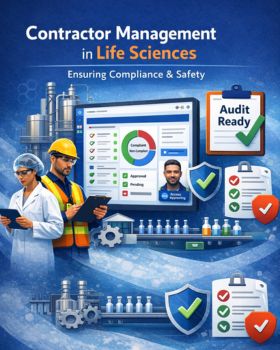
Modern contractor tracking software provides real-time dashboards that show contractor status at a glance. Compliance teams can see who is approved, who is pending documentation, and whose certifications are nearing expiry.
This proactive monitoring could help prevent last-minute access issues and reduce downtime. In industries where production schedules are tightly controlled, even short delays can impact batch timelines, supply chains, and distribution commitments.
Strengthening Audit Readiness Across Pharma, Biopharma, and Food Manufacturing
Audit preparedness is a constant priority in life sciences. Regulatory bodies may request documentation related to contractor training, safety records, site access logs, and compliance history.
When records are scattered across departments, preparing for audits becomes time-consuming. Teams often spend days collecting files, validating data, and resolving discrepancies.
A centralized contractor management platform consolidates all contractor information into structured, searchable records. Digital audit trails provide transparency into who approved documents, when inductions were completed, and whether compliance requirements were met.
This level of organization could help compliance teams respond confidently to inspections while reducing operational disruption.
Improving Safety Culture Through Digital Induction and Training
Life sciences facilities involve hazardous materials, sterile zones, high-pressure systems, and strict hygiene protocols. Contractors must understand site-specific safety procedures before beginning work.
Online induction modules integrated within contractor compliance software ensure that training is completed before site access is granted. Automated safety checks reduce the risk of untrained individuals entering controlled areas.
For chemical plants, this could help reinforce safety standards around hazardous substances. In pharmaceutical cleanrooms, it could help ensure adherence to contamination control practices. In food production, it could support hygiene compliance and allergen management protocols.
By digitizing induction processes, organizations move beyond checkbox compliance and create a structured, documented safety culture.
Enhancing Operational Efficiency Across Multiple Sites
Many life sciences companies operate across multiple facilities or geographic regions. Managing contractors across these sites manually creates inconsistencies and inefficiencies.
A scalable contractor management platform allows standardized workflows across locations while maintaining site-specific requirements. Central teams gain visibility into contractor activity across the organization, while local managers retain operational control.
This centralized yet flexible approach could help reduce duplication of effort, improve reporting accuracy, and streamline governance processes.
The Business Case for Digital Contractor Management
Beyond compliance and safety, there is a strong operational argument for adopting contractor management software demo solutions before implementation.
Evaluating a contractor management software demo allows stakeholders to understand how workflows align with existing quality systems. It provides visibility into automation capabilities, reporting features, and integration potential.
When selecting the right contractor portal, life sciences organizations should consider:
- Customizable approval workflows
- Automated document expiry alerts
- Secure cloud-based access
- Integration with existing compliance systems
- Comprehensive reporting capabilities
The right solution does more than store documents. It transforms contractor governance into a controlled, measurable, and optimized process.
Supporting Regulatory Compliance in High-Risk Environments
Regulatory expectations in pharma, biopharma, chemical, and food sectors continue to evolve. Digital systems provide traceability, accountability, and data integrity that manual processes struggle to match.
A structured contractor compliance software solution could help align contractor management with broader quality management systems. Automated tracking, digital signatures, and audit logs create defensible documentation structures that regulators expect in modern facilities.
By investing in contractor tracking software, organizations demonstrate a proactive commitment to safety, governance, and operational excellence.
Preparing for the Future of Life Sciences Operations
As life sciences industries grow more complex, contractor ecosystems expand. Facilities rely on specialized third-party expertise for maintenance, validation, calibration, and technical upgrades.
Managing this ecosystem without a digital contractor management platform increases operational risk. In contrast, centralized governance enables better decision-making, improved transparency, and stronger compliance oversight.
For pharmaceutical plants, biopharma labs, chemical manufacturers, and food & beverage facilities, structured contractor oversight is no longer optional. It is a strategic necessity.
Exploring a contractor management software demo could help leadership teams visualize how digital contractor management aligns with compliance objectives and operational goals.
Organizations that adopt a secure contractor portal gain more than administrative efficiency. They gain visibility, control, and confidence — ensuring that contractor safety and compliance remain consistent across every site, every audit, and every engagement.
Platforms such as SHEQ Network’s Contractor Management Platform are designed to support regulated industries by combining contractor tracking software and contractor compliance software within a centralized system. This structured approach could help life sciences organizations maintain real-time oversight while strengthening audit readiness across multiple facilities.
In highly regulated life sciences environments, that level of control is not just beneficial — it is essential for sustainable growth.
Schedule a 45-minute call:
https://sheqnetwork.com/schedule-a-call/
📞 Contact Us
USA: +1 (941) 337-1671
Ireland: (+353) 21 4536034
UK: (+44) 800 8021092
📧 info@sheqnetwork.com
🔗 https://sheqnetwork.com/