Disclaimer
This article is intended for informational and educational purposes only. The discussion of the Buncefield Oil Depot Explosion is based on publicly available information and widely reported investigation findings. The content does not assign blame or make allegations against any individual, organization, authority, or company. Its purpose is to highlight safety lessons and encourage improved practices in industrial risk management, safety systems, and contractor oversight.
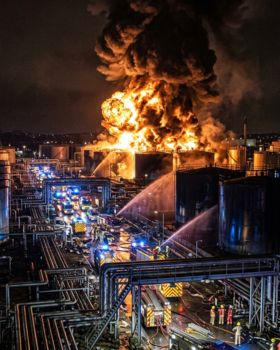
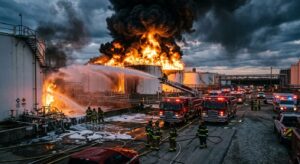
All images used in this article are AI-generated and are included solely for illustrative purposes. They do not represent real photographs or footage of the Buncefield incident and are intended only to help visualize industrial safety concepts.
Introduction
Industrial facilities that store and distribute fuel operate within complex environments where safety systems, monitoring processes, and operational procedures must work together reliably. The Buncefield Oil Depot Explosion in 2005 remains one of the most widely discussed industrial accidents in Europe and continues to shape discussions around safety management in high-risk sectors.
Located in Hertfordshire, England, the Buncefield fuel storage terminal played a significant role in supplying fuel across parts of the United Kingdom. What began as a routine fuel transfer operation eventually escalated into a devastating UK oil depot explosion, producing one of the largest explosions recorded in peacetime Europe. Beyond the immediate damage, the incident highlighted important lessons about equipment monitoring, system design, maintenance procedures, and contractor oversight in fuel storage facilities.
Understanding the events and outcomes of this Buncefield explosion provides valuable insight for industries seeking to strengthen safety culture and prevent similar oil and gas safety incidents in the future.

Understanding the Buncefield Incident
The Buncefield Oil Depot Explosion occurred on 11 December 2005 at a large fuel storage and distribution facility. During the early hours of the morning, petrol was being transferred into a storage tank at the terminal. Under normal conditions, fuel levels are closely monitored through gauges and automated shut-off mechanisms designed to prevent overfilling.
However, during this operation the tank continued filling beyond its intended capacity. The level measurement system failed to provide accurate readings, and the automatic safety cut-off mechanism did not activate as expected. As the tank overflowed, petrol began to spill onto the surrounding surface area.
Petrol is highly volatile, and when released in significant quantities it can quickly evaporate and mix with air to form a flammable vapour cloud. Over time, a large vapour cloud formed across parts of the depot. When the vapour eventually ignited, the result was a powerful oil depot explosion followed by fires that burned for several days.
The scale of the explosion caused extensive structural damage in surrounding industrial and commercial areas. The blast was strong enough to be felt miles away, and the resulting fires required a large emergency response effort.
Immediate Impact of the Explosion
The Buncefield explosion had a wide-reaching impact beyond the fuel depot itself. Nearby buildings suffered structural damage, windows shattered across surrounding areas, and significant disruption occurred throughout the local community.
Emergency services responded quickly to control the fires and manage the situation. Firefighters worked continuously for several days to bring the flames under control. While the incident caused extensive property damage, it is often noted that the timing of the event—early in the morning when fewer people were present—likely reduced the number of injuries.
The environmental impact also became an important area of concern. Firefighting water mixed with fuel and chemicals required careful management to prevent contamination of nearby land and water systems.
As with many large industrial accidents, investigations were launched to understand what had occurred and how similar events might be prevented in the future. These investigations provided valuable insight into safety system design, maintenance practices, and operational monitoring.

Investigations and Key Observations
Investigations into the Buncefield Oil Depot Explosion examined multiple aspects of the facility’s operations, including equipment performance, monitoring procedures, and safety system reliability.
Investigation reports indicated that the fuel level gauge stopped accurately reporting the tank level during the filling process. At the same time, the independent high-level safety shut-off device did not activate to stop the incoming fuel.
According to investigation reports, these system failures allowed petrol to continue flowing into the tank until it overflowed. Once the fuel spilled out and vapours formed, the conditions for a large explosion were created.
Investigators also examined maintenance practices and system testing procedures. The findings highlighted how critical it is for safety systems to be regularly inspected, calibrated, and tested to ensure that backup protections function as intended.
The investigation did not focus on assigning blame to specific individuals but instead emphasized system improvements and industry-wide safety learning. As a result, the incident became an important case study within discussions about preventing future oil and gas safety incidents.

Lessons for the Oil and Gas Industry
The UK oil depot explosion at Buncefield demonstrated how multiple small system failures can combine to produce a large and unexpected event. Facilities that store large volumes of fuel rely on layered safety protections. When several layers fail simultaneously, the consequences can escalate quickly.
One major lesson from the Buncefield explosion is the importance of reliable instrumentation. Level gauges, alarms, and automatic shut-off mechanisms must operate correctly at all times. Redundant systems are designed to provide backup protection, but these systems must also be tested regularly to ensure they respond as expected.
Another key learning involves operational monitoring. When fuel transfer operations occur, accurate real-time monitoring can help identify irregular conditions before they develop into hazardous situations.
Maintenance planning is equally important. Storage tanks, sensors, pipelines, and safety systems require periodic inspection and verification to ensure that equipment performance remains within safe limits.
These lessons continue to influence how industries evaluate risk and design operational safety frameworks in fuel storage facilities.

The Role of Contractor Oversight and Safety Management
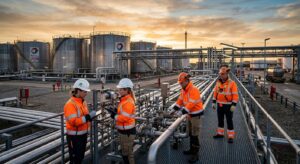
Large industrial sites often rely on specialized contractors for equipment inspection, maintenance, instrumentation testing, and infrastructure upgrades. Because multiple teams may be involved in maintaining complex facilities, effective coordination and oversight become essential.
Contractor activities must align with site safety policies, operational procedures, and maintenance schedules. Clear documentation, scheduled testing, and accurate reporting systems can help ensure that safety-critical equipment receives proper attention.
Modern digital systems have made it easier for organizations to track contractor activities, monitor inspection schedules, and maintain centralized records. In some cases, adopting structured digital tools such as the best contractor management software could help organizations maintain clearer oversight of contractor work, certification status, and maintenance documentation.
Improved contractor coordination does not eliminate risk entirely, but it can strengthen transparency, communication, and accountability across teams working within complex industrial environments.

Strengthening Prevention Strategies
Industrial safety has evolved significantly over the past decades, partly because incidents like the Buncefield Oil Depot Explosion have prompted industry-wide reflection and improvement.
Today, many facilities incorporate additional layers of protection such as advanced monitoring systems, automated alarms, and improved hazard analysis procedures. Digital risk management platforms also allow operators to analyze safety data, track maintenance trends, and identify potential vulnerabilities before they lead to operational disruptions.
Organizations now place greater emphasis on risk assessments, process safety management, and integrated contractor oversight. These approaches help companies better understand how technical systems, human processes, and operational environments interact.
Preventing another oil depot explosion of similar scale requires continuous improvement, regular system testing, and strong communication between operational teams, contractors, and safety specialists.
Why the Buncefield Incident Still Matters
Nearly two decades later, the Buncefield explosion remains one of the most frequently referenced case studies in industrial safety discussions. It illustrates how complex industrial systems require multiple safeguards working together reliably.
For engineers, safety managers, and contractors working in high-risk environments, studying past events helps strengthen future prevention strategies. Each major industrial incident contributes to a broader understanding of risk management and operational safety.
While technology has improved since 2005, the fundamental lessons remain relevant: accurate monitoring, reliable safety systems, structured maintenance procedures, and effective oversight of contractor activities are all essential elements of safe industrial operations.
By examining the events surrounding the Buncefield Oil Depot Explosion, industries continue to learn how to strengthen safety frameworks and reduce the likelihood of similar oil and gas safety incidents in the future.

Conclusion
The Buncefield Oil Depot Explosion remains a powerful reminder of how critical reliable safety systems, regular inspections, and effective contractor oversight are in high-risk industries. Learning from incidents like this can help organizations strengthen operational controls and reduce the likelihood of future oil and gas safety incidents.
Organizations looking to strengthen contractor oversight and safety documentation may benefit from digital platforms such as SHEQ Network, which help streamline contractor compliance, inspections, and safety processes.
Schedule a 45-minute call:
Book your personalized demonstration today
📞 Contact Us
USA: +1 (941) 337-1671
Ireland: (+353) 21 4536034
UK: (+44) 800 8021092
📧 info@sheqnetwork.com
🔗 https://sheqnetwork.com/