Understanding the Shift from Reactive to Predictive Safety

For years, organizations have relied on reactive approaches to manage contractor safety. Incidents happen, investigations follow, and improvements are implemented afterward. While this approach has contributed to safer workplaces, it often comes after risks have already materialized.
With the adoption of digital systems, especially a structured Contractor management solution, businesses are now exploring whether risks can be identified earlier. Artificial intelligence is increasingly being discussed as a possible way to support this shift.
AI could help identify patterns and potential risks, but it does not guarantee prediction of all contractor safety incidents. Instead, it supports a more informed and proactive approach to safety management.
Can AI Actually Predict Contractor Safety Risks?

The short answer is that AI could help identify patterns in historical data that may be associated with higher risk situations.
When used alongside a Contractor management platform, AI can analyze data such as past incidents, contractor performance trends, safety check outcomes, and compliance records. Over time, this analysis could highlight areas where attention may be required.
For example, repeated safety check gaps or delayed compliance submissions might signal increased risk. AI could assist in identifying these patterns earlier, allowing teams to respond more proactively.
At the same time, it is important to understand that these insights are based on available data, not certainty. AI supports decision-making, but it does not replace human judgment.
How Contractor Management Systems Support Predictive Insights

Before AI can deliver meaningful insights, organizations need structured and reliable data. A Contractor management portal plays a key role in centralizing this information.
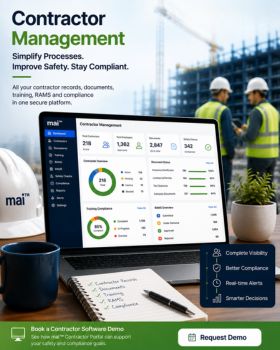
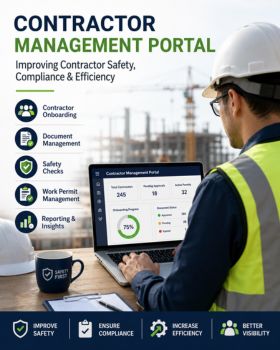
These systems bring together contractor records, safety documentation, training data, and work permit details in one place. A Contractor compliance software could help ensure that safety checks are completed consistently and that gaps are visible.
Current contractor management systems primarily focus on structured data and safety checks, which may serve as a foundation for future predictive capabilities, depending on data quality and implementation.
👉 If you are exploring how such systems work in practice, reviewing a contractor software demo may provide a clearer view of how such systems operate in practice.
Real-World Scenarios Where AI Could Help

Consider a situation where a contractor consistently misses safety checks or submits incomplete documentation. A digital system could flag this pattern, and AI could assist in analyzing whether similar patterns have been observed alongside past incidents.
In another case, if multiple contractors on a site show similar compliance gaps, AI could highlight this as a broader operational concern.
These insights could help safety teams prioritize actions more effectively. Instead of reviewing every detail manually, they could focus on areas that may require immediate attention.
The Importance of Safety Checks Over Verification

It is important to approach contractor safety processes with clarity. Rather than focusing on “verification,” modern systems are better positioned to support structured safety checks.
These checks provide a consistent way to review contractor readiness, documentation, and compliance without overpromising absolute validation. This approach supports better transparency and aligns with how digital contractor management systems are evolving.
Limitations of AI in Contractor Safety

While AI offers useful possibilities, it also has limitations that should be considered.
Its effectiveness depends on the quality of data available within a Contractor management solution. Incomplete or inconsistent data may lead to less reliable insights.
Additionally, not all risks are predictable. Human behavior, environmental conditions, and unexpected site challenges can still lead to incidents.
AI should therefore be seen as a support tool that could help improve decision-making, rather than a complete solution on its own.
The Future of Contractor Management and AI

The future of Contractor management is likely to combine structured systems with intelligent insights.
As organizations continue to digitize their safety processes, the availability of reliable data will improve. Over time, this could allow AI to provide more meaningful recommendations and highlight hidden patterns.
Platforms such as SHEQ Network are designed to capture and organize contractor and safety data, which may support more structured safety processes. This type of foundation could help businesses prepare for more advanced capabilities in the future.
👉 Exploring how such a platform works through a contractor software demo could provide useful insight into how safety checks, compliance tracking, and contractor data management come together in one system.
Conclusion

AI may not predict every contractor safety risk, but it represents a step toward more proactive safety management.
When supported by a structured Contractor management platform, it could help identify patterns, highlight potential risks, and improve overall visibility. The real value lies in combining human expertise with data-driven insights.
For organizations looking to strengthen their approach, building a reliable digital foundation is essential. Solutions like mai™ Contractor Portal could help streamline contractor data, support consistent safety checks, and improve compliance tracking.
👉 If you want to better understand how this works in practice, exploring a contractor software demo could be a useful next step toward building a more informed and proactive safety strategy.
Learn more about the solution here:
https://sheqnetwork.com/contractor-management-software/
Book your personalized demonstration today
📞 Contact Us
USA: +1 (941) 337-1671
Ireland: (+353) 21 4536034
UK: (+44) 800 8021092
📧 info@sheqnetwork.com
🔗 https://sheqnetwork.com/