Disclaimer
This article is intended for informational and educational purposes only. It is based on publicly available information regarding the Francis Scott Key Bridge Collapse and related reports available at the time of writing. The article does not assign responsibility, fault, negligence, or liability to any individual, organization, or entity. Ongoing investigations may provide additional findings and context. Readers should consult official reports and regulatory guidance for the most accurate and up-to-date information.
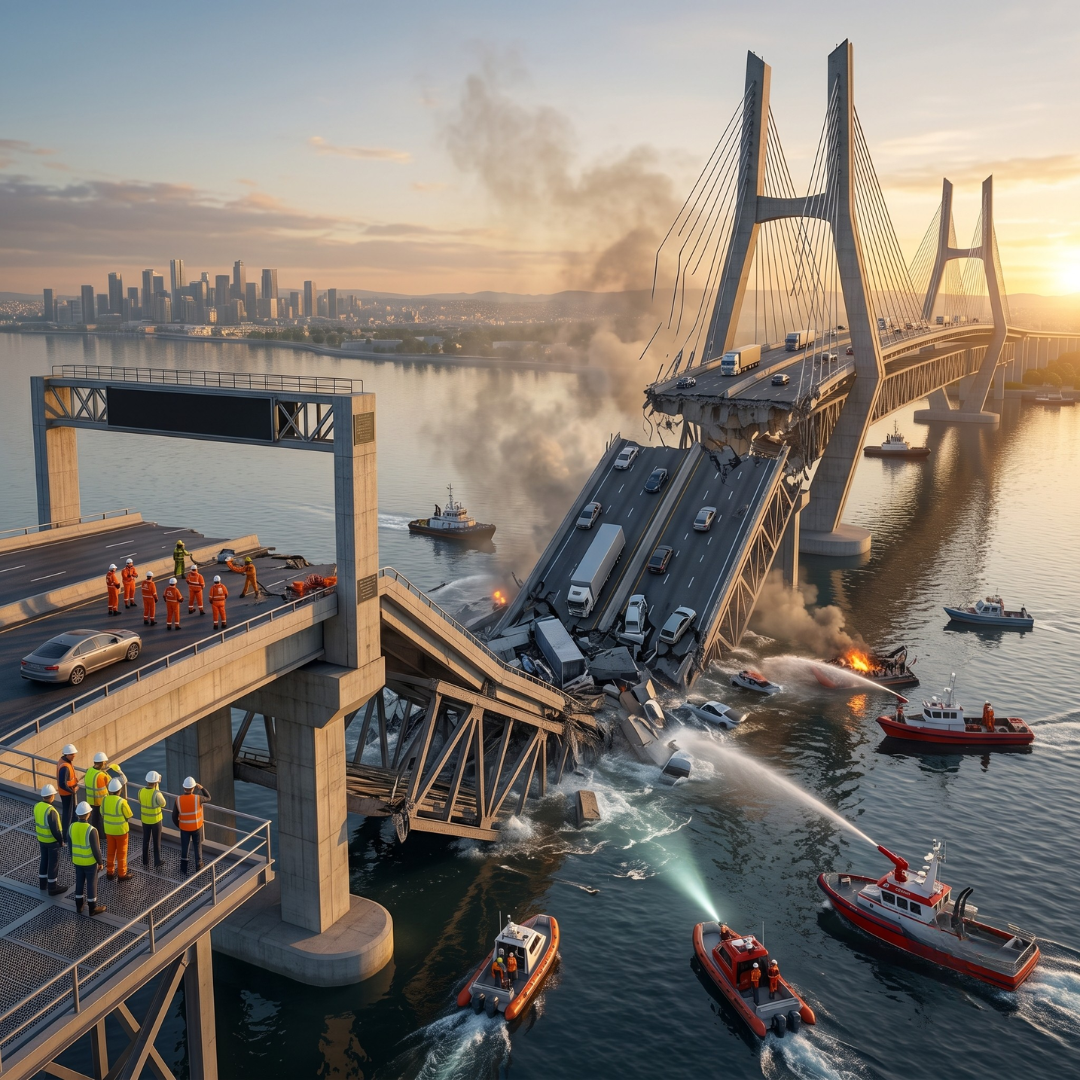
The Francis Scott Key Bridge Collapse, also widely referred to as the Baltimore Bridge Collapse, remains one of the most significant infrastructure incidents of 2024. The event occurred on March 26, 2024, when a large cargo vessel experienced a loss of power and collided with one of the bridge’s support structures. The impact resulted in a substantial section of the bridge collapsing into the Patapsco River, disrupting transportation routes and operations at the Port of Baltimore.
Beyond the immediate impact on transportation and maritime activities, the incident highlighted the importance of emergency preparedness, communication, contractor accountability, and workforce protection during infrastructure projects. Several workers engaged in bridge maintenance activities were present on the structure during the event. As investigations and recovery efforts progressed, the tragedy prompted discussions across construction, engineering, maritime, and safety industries regarding risk management, emergency preparedness, and contractor oversight.
While investigations continue to provide valuable insights, the Baltimore Port Bridge Collapse offers an opportunity for organizations to reflect on safety practices and identify ways to strengthen contractor management systems for future projects.
While the initiating event was maritime in nature, maintenance contractors were working on the structure at the time, highlighting the importance of workforce visibility, emergency communications, contractor accountability, and evacuation planning on critical infrastructure projects. Although the event did not originate from construction activities, it offers valuable lessons for organizations responsible for managing contractors in complex and high-risk environments.

Understanding the Baltimore Bridge Incident
The incident provides an example of how infrastructure projects may be affected by risks originating outside traditional construction activities. In this case, a maritime event directly impacted an active infrastructure asset where maintenance work was underway.
Large-scale projects often involve multiple stakeholders, including contractors, subcontractors, maintenance crews, transportation authorities, and emergency response teams. Managing these interconnected activities requires comprehensive planning and clear communication processes.
Although many organizations focus heavily on workplace hazards such as falls, electrical risks, and equipment operation, external risks can sometimes have equally significant consequences. Events involving transportation networks, environmental conditions, utility failures, or vessel traffic may introduce hazards that require additional consideration during project planning.
The Importance of Contractor Safety Management
Contractors frequently work in dynamic environments where conditions can change rapidly. Infrastructure maintenance projects, in particular, often involve elevated work areas, heavy machinery, traffic management, and coordination with multiple parties.
A structured contractor safety program could help organizations:
- Improve hazard identification processes.
- Enhance communication between stakeholders.
- Strengthen emergency response planning.
- Support compliance with safety requirements.
- Maintain visibility over contractor activities.
The lessons emerging from the Francis Scott Key Bridge Collapse reinforce the value of proactive safety planning, particularly when work is being performed on critical infrastructure assets.

Risk Assessments and External Risks
The incident highlights the importance of considering both operational and external risks when assessing work activities on critical infrastructure. While not every scenario can be anticipated, organizations responsible for infrastructure maintenance and construction projects may benefit from evaluating a broad range of potential hazards that could affect worker safety.
Organizations conducting maintenance or construction activities on bridges, ports, tunnels, and similar assets could benefit from evaluating:
- Vessel traffic patterns.
- Transportation disruptions.
- Emergency evacuation routes.
- Communication protocols.
- Environmental conditions.
- Third-party operational risks.
While not every scenario can be predicted, comprehensive risk assessments could help improve preparedness and decision-making when unexpected events occur.
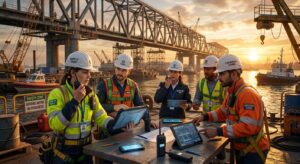
Communication and Coordination Remain Essential
One of the key takeaways from the Baltimore Bridge Collapse is the importance of effective communication across all stakeholders.
Contractors often rely on timely information regarding site conditions, operational changes, and potential hazards. Delays or gaps in communication can increase uncertainty during rapidly evolving situations.
Organizations may consider implementing communication strategies that include:
- Real-time notifications.
- Emergency contact procedures.
- Centralized reporting systems.
- Incident escalation workflows.
- Contractor briefing sessions.
Improved communication processes could help ensure that workers receive critical information quickly and consistently.
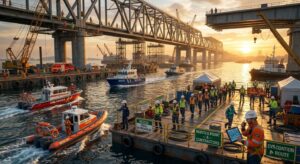
Emergency Preparedness for High-Risk Environments
Emergency preparedness is a fundamental component of any safety program. Infrastructure projects frequently present unique challenges due to their scale, location, and complexity.
Emergency response plans could include:
- Site-specific evacuation procedures.
- Rescue and recovery protocols.
- Emergency communication systems.
- Coordination with local authorities.
- Regular emergency drills and exercises.
The Baltimore Port Bridge Collapse illustrates how rapidly conditions can change during an unexpected event. Organizations that regularly review and test emergency response procedures may be better positioned to respond effectively when incidents occur.

Technology and Contractor Oversight
Digital safety solutions are becoming increasingly common across construction and infrastructure industries. Technology can provide organizations with improved visibility into contractor activities, training records, permits, and compliance requirements.
A modern mai™ Contractor Management Portal could help organizations centralize important contractor information while supporting consistent safety practices across multiple projects.
Features commonly found within contractor management systems include:
- Contractor prequalification.
- Training verification.
- Document management.
- Incident reporting.
- Compliance monitoring.
- Risk assessment tracking.
These tools are not intended to eliminate risk entirely; however, they could help organizations maintain greater oversight and streamline safety processes.
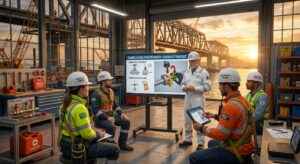
Strengthening Compliance and Safety Culture
Safety performance is often influenced by organizational culture as much as by procedures and technology. A strong safety culture encourages workers, supervisors, and contractors to actively participate in hazard identification and risk reduction efforts.
Organizations seeking to improve contractor oversight may focus on:
- Ongoing safety training.
- Clear accountability structures.
- Open reporting environments.
- Regular audits and inspections.
- Continuous improvement initiatives.
Many companies are exploring digital contractor management platforms to support these objectives. Such systems could help create more consistent processes while improving visibility into contractor performance and compliance activities.

Building More Resilient Infrastructure Projects
The Francis Scott Key Bridge Collapse serves as a reminder that infrastructure resilience involves more than structural design. It also includes operational planning, contractor management, emergency preparedness, and stakeholder coordination.
Organizations responsible for construction and maintenance activities can use lessons from the incident to review existing practices and identify opportunities for improvement. By considering both traditional workplace hazards and broader operational risks, companies may be able to strengthen safety outcomes and improve project resilience.
While every project presents unique challenges, proactive planning, effective communication, and robust contractor oversight could help support safer working environments across the infrastructure sector.

Conclusion
The Francis Scott Key Bridge Collapse, Baltimore Bridge Collapse, and Baltimore Port Bridge Collapse represent a significant event that has generated important discussions around infrastructure safety and contractor protection. Although investigations continue to provide further insights, the incident highlights the value of preparedness, communication, risk management, and effective contractor oversight.
Organizations seeking to strengthen contractor safety programs may consider implementing structured processes, conducting comprehensive risk assessments, and evaluating digital contractor management solutions such as the mai™ Contractor Management Portal. Combined with strong leadership and continuous improvement efforts, digital contractor management solutions could help organizations maintain visibility, support compliance, and enhance safety performance across complex projects.
Frequently Asked Questions (FAQs)
- What was the Francis Scott Key Bridge Collapse?
The Francis Scott Key Bridge Collapse occurred on March 26, 2024, when a cargo vessel lost power and struck a support pier of the bridge in Baltimore, Maryland. The impact caused a significant section of the bridge to collapse into the Patapsco River, disrupting transportation and maritime operations while prompting extensive safety and infrastructure reviews.
- What contractor safety lessons can be learned from the Baltimore Bridge Collapse?
The Baltimore Bridge Collapse highlights the importance of comprehensive risk assessments, effective communication, emergency preparedness, and contractor oversight. Organizations involved in infrastructure projects could benefit from reviewing safety procedures and ensuring contractors are adequately trained and informed about both operational and external risks.
- How could a mai™ Contractor Management Portal help improve safety on infrastructure projects?
A mai™ Contractor Management Portal could help organizations centralize contractor records, track training and compliance requirements, manage documentation, monitor safety performance, and improve communication. These capabilities may support better contractor oversight and contribute to safer project execution in complex and high-risk environments.
Book your personalized demonstration today
📞 Contact Us
USA: +1 (941) 337-1671
Ireland: (+353) 21 4536034
UK: (+44) 800 8021092
📧 info@sheqnetwork.com