Managing workplace health and safety involves far more than completing forms or storing documents. EHS teams often need to coordinate risk assessments, contractor information, training records, corrective actions, compliance documents, inspections, and other safety activities across multiple departments and locations.
As these responsibilities grow, manual processes, spreadsheets, emails, and disconnected systems can make it difficult to maintain clear visibility. This is one reason organizations are exploring Health and safety management software companies and looking for digital solutions that can bring important EHS processes into a more structured environment.
However, choosing a system should not simply be about finding the longest feature list. Organizations should consider how effectively a solution can support their actual safety processes, users, contractors, and compliance responsibilities.
 What Is Health and Safety Management Software?
Health and safety management software is designed to help organizations organize, monitor, and manage different aspects of workplace safety and compliance through a digital platform. Instead of relying heavily on separate spreadsheets, paper documents, email chains, and manually maintained records, teams can use software to create more consistent and accessible processes.
Depending on the solution, this can include areas such as risk management, contractor management, incident reporting, corrective actions, training records, audits, document management, and compliance monitoring.
For EHS professionals, having relevant information available within structured workflows can help reduce administrative effort and provide better visibility when information needs to be reviewed or actioned.
Look for a System That Supports Your Existing EHS Processes
One of the first considerations when evaluating EHS software companies is whether the technology supports the way an organization actually operates.
Every workplace has different requirements. A manufacturing facility, pharmaceutical site, construction project, or organization managing a large contractor workforce can have very different safety processes. A useful platform should therefore support practical workflows rather than forcing every business into the same rigid approach.
Organizations can consider how easily the system fits existing procedures, how information is recorded, and whether employees and EHS teams can use the platform without unnecessary complexity.
Software that makes everyday processes easier to manage can support stronger adoption across the organization and help teams spend more time focusing on meaningful EHS activities.
Centralized Information and Better Visibility
Safety information can quickly become fragmented when records are stored across spreadsheets, shared drives, emails, filing cabinets, and individual systems. This can make finding current information unnecessarily time-consuming.
A key capability to look for in EHS compliance software is the ability to centralize important records and provide clear visibility of relevant information.
Dashboards and reporting tools can help EHS teams understand what requires attention without manually reviewing numerous files. For contractor management, for example, teams can benefit from having access to contractor company details, insurance information, risk assessments, licences, employee training records, induction information, and other relevant documentation from a structured platform.
Better visibility can also support more informed decision-making because teams can access relevant information when it is needed.
Contractor Management Should Be a Key Consideration
Contractors introduce an additional layer of administration for many organizations. Before and during work, businesses can need to manage company documentation, employee records, training, risk assessments, licences, insurance information, inductions, and ongoing contractor requirements.
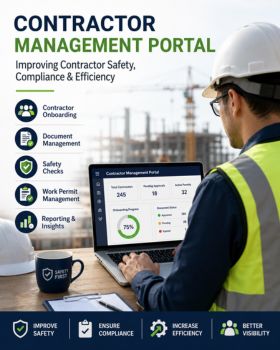
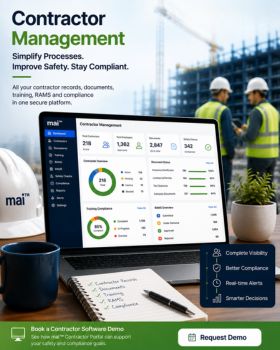
EHA Soft offers the mai™ Contractor Portal, which is designed to help organizations manage contractor information through a centralized digital environment. The platform provides real-time visibility of contractor company and employee details and supports tools including RAMS review, pre-qualification questionnaires, vendor ratings, reporting, alerts, and contractor record management.
This approach could help reduce the time teams spend chasing documents and manually checking multiple information sources while giving EHS professionals a clearer picture of contractor information.
Organizations interested in understanding how digital contractor management could fit their processes can also book a Contractor Software Demo to see how the mai™ Contractor Portal works in practice.
Safety Checks and Structured Oversight
Another important consideration when comparing Health and safety management software companies is how the system supports safety checks.
Digital Safety Checks can help organizations create a more structured approach to reviewing relevant contractor and safety information. Rather than relying on informal processes or information scattered across different locations, teams can use defined workflows to carry out checks and maintain accessible records.
This can be particularly valuable when organizations manage large contractor populations, multiple sites, or complex operational environments. Having structured information available can help EHS teams identify areas requiring attention and support more consistent internal processes.
The objective is not simply to digitize paperwork. A well-designed system should make information easier to manage, review, and act upon.
Compliance Tracking and Alerts
Managing expiry dates and compliance-related documentation can become increasingly difficult as an organization grows. Contractor insurance, licences, certifications, training records, and other documents can all require ongoing attention.
A capable EHS compliance software company should provide tools that help users stay aware of upcoming requirements. Automated alerts and notifications can support teams by highlighting documents or records that require attention, reducing dependence on manually maintained reminder spreadsheets or calendars.
This creates a more proactive workflow in which teams can address requirements as they arise instead of spending unnecessary time repeatedly searching through records.
Reporting Should Turn Information Into Useful Insight
Collecting safety information has limited value if teams cannot easily understand or use it. Reporting capabilities should therefore be an important part of the software selection process.
Clear dashboards and reports can help organizations identify trends, review contractor information, monitor outstanding actions, and understand where attention could be required.
When information is presented clearly, management and EHS professionals can make faster, better-informed decisions. This is particularly useful for organizations operating across multiple departments or sites where manually combining information can consume significant administrative time.
Ease of Use Matters More Than Feature Count
A sophisticated platform only provides value when people can use it effectively.
When assessing Health and safety management software, organizations should consider the experience of both administrators and everyday users. Straightforward navigation, clear dashboards, accessible information, and simple workflows can help encourage adoption.
This is particularly important for contractor-facing systems. Contractors may interact with the platform only when submitting documents, updating information, completing required processes, or responding to requests. Making these interactions clear and efficient can help reduce unnecessary communication between contractors and internal teams.
Scalability and Long-Term Flexibility
Safety management requirements rarely remain static. Contractor numbers can increase, organizations can expand to additional sites, internal procedures can evolve, and reporting requirements can become more sophisticated.
The right software should be capable of supporting this development without requiring organizations to rebuild their safety management processes from the beginning.
When considering different solutions, businesses can therefore look beyond their immediate requirements and think about how the platform could support future operational growth. Scalability, configurable workflows, reporting capabilities, and the ability to manage larger volumes of safety information can all contribute to long-term value.
How EHA Soft and mai™ Can Support Digital Safety Management
EHA Soft develops software solutions focused on practical EHS and compliance challenges. The mai™ platform is designed to help organizations move away from fragmented manual processes and toward more structured digital management.
For organizations with significant contractor activity, the mai™ Contractor Portal provides tools for managing contractor companies and employees, documentation, RAMS, training information, pre-qualification processes, vendor ratings, alerts, and reporting from a centralized environment.
This can help EHS professionals gain clearer visibility of contractor information while reducing repetitive administration. Instead of relying heavily on spreadsheets, emails, and separate files, relevant information can be managed through structured workflows.
Organizations considering a contractor management solution can book a Contractor Software Demo to explore the mai™ Contractor Portal and understand how its features could support their existing contractor and EHS processes.
Making the Right Choice
Choosing between Health and safety management software companies should ultimately come down to how well a solution supports the organization’s real operational requirements.
Businesses should consider usability, visibility, contractor management capabilities, Safety Checks, compliance tracking, alerts, reporting, scalability, and the ability to support existing EHS workflows. The goal should not simply be to replace paper with digital forms, but to create a system that helps teams manage information more effectively and make safety processes easier to oversee.
A well-designed digital platform can help EHS teams reduce administrative complexity, improve access to important information, and maintain greater visibility across safety and contractor activities.
For organizations looking to modernize contractor management as part of their wider EHS strategy, EHA Soft’s mai™ Contractor Portal offers a structured approach to managing contractor information, compliance records, RAMS, training data, alerts, reporting, and related workflows. A Contractor Software Demo can provide a practical view of how the platform can support day-to-day contractor management and help organizations determine whether it is the right fit for their operations.
Book your personalized demonstration today
📞 Contact Us
USA: +1 (941) 337-1671
Ireland: (+353) 21 4536034
UK: (+44) 800 8021092
📧 info@sheqnetwork.com